

Fifteen Years of Jae Nam: Why This Work Still Matters
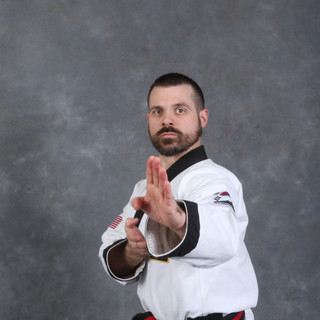
People often assume martial arts schools begin with confidence, clarity, and a perfectly mapped plan.
Jae Nam didn’t.
Fifteen years ago, I started this school during one of the most unstable periods of my life. By that point, I had already spent years training under other instructors and taking on leadership roles—head instructor, student recruitment, event support, all the things that come with being deeply invested in a school. Like many instructors as they progress, I was encouraged to eventually open my own studio. When the opportunity came to run a location under another instructor, I took it.
That experience taught me a great deal. It also showed me what didn’t work for me.
A series of events eventually led me to step away, and looking back, I could have handled parts of that time better. But growth rarely comes from clean transitions. What I do know is that I reached a point where I needed to find out who I actually was—not just as an instructor, but as a person.
Building a Home, Not Just a School
One of the biggest differences between stepping into an established studio and opening my own was something I didn’t fully understand at the time: ownership changes everything.
At the previous school, there was already a culture, established friendships, expectations, and routines. Even though people made genuine efforts to welcome me, it never truly felt like home. It felt like a workplace.
Opening Jae Nam felt different immediately. It felt like building my own home.
At a time when much of my life felt chaotic, martial arts had always been my constant. So while opening a business in search of stability might sound ironic, training had been the most reliable grounding force I’d ever known. I wanted to make it my livelihood—and more importantly, share that stability with others.
I’ve heard studio owners joke that we start schools just so we can train all the time. Maybe there’s some truth to that. But I’ve also always been someone who values thoughtful systems—ways of doing things intentionally—while constantly refining them. There’s a reason I never loved working for other people. I’ll always do the best job I can, but eventually I need the restrictions of someone else’s rules gone.
Even the name Jae Nam reflected that instinct. I remember being told, half-jokingly, that I was “so traditional,” and that using my name or the town’s name might be a better business move. But the name mattered to me. It still does.
Progress, Proof, and the Long Game
From the beginning, my responsibility as an instructor felt clear: help people develop the best versions of themselves—and show them that the work along the way matters.
Martial arts is often described in terms of self-defense or character building, and those things are important. But what I wanted most was for students to experience confidence through focused effort. To feel, firsthand, what happens when you show up consistently and work toward something meaningful.
People walk through the door for many reasons—fitness, self-defense, stress relief, community, something for their kids. But underneath it all, everyone wants the same thing: to feel like they’re improving their life.
Martial arts gives us a built-in structure for growth. Belts and ranks provide visible milestones, but anyone who has trained knows that the real work happens between them. It’s the hours on the floor, the repetitions, the frustration, the small adjustments, and the moments where something finally clicks. Progress isn’t just what’s tied around your waist—it’s what you’ve experienced, struggled with, and learned along the way. That’s why one of our attitude requirements is to “frequently inspect your own achievements.” It applies to me just as much as it does to my students. When you’re in the middle of the work, progress can be hard to see—but looking back, focused effort has always led somewhere.
Not always on my timeline. But always where it needed to.
When Things Get Quiet
Of course, growth hasn’t been linear.
The ebb and flow of student enrollment has been one of the hardest realities of running a school. Some months bring new faces and momentum. Others bring silence. When you’re doing everything yourself, something always competes for attention—and for me, student training has always come first.
Marketing, sales, and recruitment systems have been ongoing challenges, despite courses taken, seminars attended, and advice gathered. For much of Jae Nam’s life, I also worked part-time jobs. Those jobs were never fulfilling—but they constantly reminded me why I didn’t want to work for someone else.
Even during the most stressful periods, I somehow found a way to keep going.
I can’t imagine my life without Jae Nam. And I know—deeply—that what we teach through martial arts and Ki Gong can help people navigate life with greater awareness, balance, and connection between mind, body, and spirit. When something genuinely benefits those who embrace it, how could it be the wrong path?
Why This Training Feels Different
Over time, Jae Nam began to clarify what it had always been beneath the surface.
Early on, I tried to follow what I thought was “the right way.” I mirrored industry standards and copied what other schools were doing, even when parts of it didn’t sit right with me. Eventually, I stopped fighting my instincts.
One thing students often tell me is that I explain why just as much as how. Movements aren’t just memorized—they’re understood. Forms aren’t just choreography—they contain self-defense principles. Ki Gong isn’t just exercise—it has a purpose, whether that’s stress release, recovery, or energy regulation.
I’ve become far more interested in depth of knowledge than width. I don’t want to learn one more thing if I can’t explore all the ways it can be used. Less, when explored fully, really can be much more.
That shift changed everything. Classes improved. Students engaged more deeply. And I felt less restricted, more fulfilled—not because my way is the only way, but because it’s an honest one.
“I’m Not Sure This Is for Me”
One of the most common things I hear from new people is hesitation:
“I’m not athletic.” “I’m too stressed.” “I don’t think martial arts is for me.”
My response is usually a question: Does a child wait to be smart before going to school?
You don’t become the thing before you begin. You start, and then you grow. You won’t get less stressed by stressing yourself out. And when someone says martial arts might not be for them, I usually ask, Wouldn’t you rather know?
We offer trials for a reason. I’ll never pressure anyone to join. Training isn’t for everyone, and there are many paths to self-improvement. But there is no perfect time—there’s only starting and getting better, or not starting at all.
Everyone is bad at things until they have enough experience not to be. That’s not failure. That’s life.
Fifteen Years In
Reaching fifteen years is a huge achievement. Most small businesses don’t make it past five. Somehow, I’ve done it three times over.
More than that, this anniversary doesn’t feel like a restart—it feels like maturity. Like the next stage of something that’s been growing quietly and intentionally all along. Jae Nam has become a relationship, and like any lasting relationship, it has to evolve.
The energy surrounding this anniversary feels like the beginning of something I always believed was possible finally coming into view. This year feels like the tip of the iceberg.
If someone walks into Jae Nam for the first time during this anniversary—whether they’re a child, an adult, or someone who’s never trained before—I want them to feel inspired. Inspired by the practice. Inspired by the community. And inspired by the possibility that this place could be a source of stability, no matter what first sparked their curiosity.
Fifteen years in, this work still matters.
And in many ways, it feels like we’re just getting started.
An Invitation to Celebrate
On Saturday, January 3rd, 2026, Jae Nam Training Academy will celebrate 15 years with a community Open House.
This day isn’t about sales or spectacle. It’s about opening the doors, sharing the practice, and welcoming anyone who’s curious to experience what training here actually feels like. There will be opportunities to explore martial arts and Ki Gong, connect with our community, and learn more about the work we do—whether you’re brand new or someone who trained here years ago.
If this reflection resonated with you—if you’re curious about training, seeking stability, or simply want to experience something different—I invite you to join us.
Please RSVP in advance so we can share the full schedule and details with you.
I look forward to welcoming you into the space and celebrating this milestone together.


Well said! Your students are lucky to have you as an instructor!